Tuesday, September 8, 2020

Multisystem Inflammatory Syndrome (MIS-C)

Received this email from a friend? Sign up now

September 8, 2020
This message includes updates on the COVID-19 response from CDC. The COVID-19 Outbreak is a rapidly evolving situation and information will be updated as it becomes available.
young boy wearing mask holding teddy bear looking out window

Multisystem Inflammatory Syndrome 

Multisystem inflammatory syndrome in children (MIS-C) is a condition where different body parts can become inflamed, including the heart, lungs, kidneys, brain, skin, eyes, or gastrointestinal organs. Children with MIS-C may have a fever and various symptoms, including abdominal (gut) pain, vomiting, diarrhea, neck pain, rash, bloodshot eyes, or feeling extra tired. We do not yet know what causes MIS-C. However, many children with MIS-C had the virus that causes COVID-19 or had been around someone with COVID-19. 
small girl with fever

Health Department-Reported Cases of MIS-C in the United States

Since mid-May 2020, CDC has been tracking reports of MIS-C, a rare but serious condition associated with COVID-19. MIS-C is a new syndrome, and many questions remain about why some children develop it after a COVID-19 illness or contact with someone with COVID-19, while others do not. As of September 3, 2020, CDC has received reports of 792 confirmed cases of MIS-C and 16 deaths in 42 states, New York City, and Washington, DC. Additional cases are under investigation.

woman wearing mask with luggage in line at airport

COVID-19 Travel Recommendations by Destination

CDC lists countries by COVID-19 High Risk, Moderate Risk, and Very Low Risk. 
server wearing mask at restaurant

Considerations for Restaurants and Bars

As restaurants and bars resume operations in some areas of the United States, CDC offers the following considerations for ways in which operators can protect employees, customers, and communities and slow the spread of COVID-19. 
COVID-19 testing with swab

Interim Guidance for Rapid Antigen Testing for SARS-CoV-2

Antigen tests can be used in a variety of testing strategies to respond to the COVID-19 pandemic. This interim guidance is intended for clinicians who order antigen tests, receive antigen test results, and/or perform point of care testing, as well as for laboratory professionals who perform antigen testing in a laboratory setting or at the point of care and report those results. 

Coronavirus Disease 2019 (COVID-19) in the U.S.

As of September 8, 2020

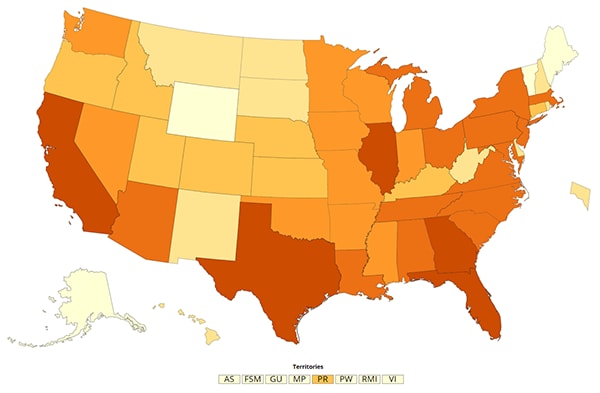
In the United States, there have been 6,287,362 confirmed cases of COVID-19 detected through U.S. public health surveillance systems in 50 states and the District of Columbia, Puerto Rico, Guam, the Northern Marianas Islands, and U.S. Virgin Islands. 

CDC provides updated U.S. case information online daily.

This map shows COVID-19 cases reported by U.S. states, the District of Columbia, New York City, and other U.S.-affiliated jurisdictions

Centers for Disease Control and Prevention

1600 Clifton Rd   Atlanta, GA 30329   1-800-CDC-INFO (800-232-4636)   TTY: 888-232-6348
Questions or Problems  |  Unsubscribe

Saturday, September 5, 2020

WHO Health Emergency Highlights #107

View this email in your browser
Towards equitable access to vaccines: 172 countries, multiple candidates engaged in COVAX Facility
As of August, at least 172 countries are engaging with the WHO-led COVAX Facility, the vaccines pillar of the ACT-Accelerator, which has both the largest and most diverse COVID-19 vaccine portfolio in the world, with nine vaccines already in the portfolio, and nine others under evaluation. Discussions are ongoing with four more producers.
Europe
Measles and rubella elimination continues amid COVID-19
The verification process for the elimination of measles and rubella continues amidst the COVID-19 pandemic. The independent European Regional Verification Commission for Measles and Rubella Elimination (RVC) is reviewing surveillance and immunisation data submitted by the national verification committees, to assess the status of measles and rubella elimination in each country and the Region.
Ghana
Striving to keep health worker infections at bay
With more than a decade's experience as a nurse, Evelyn Narki Dowuona, working in Ghana, bears great responsibility to keep her team and colleagues safe from getting infected with COVID-19. She says her greatest triumph is seeing a patient recover and leave the hospital healthy. Here she shares her story on the risks that health care workers face, but also the many great moments for the work that she does.
Paraguay
'Parents must continue vaccinating their children even during COVID-19'
To keep vaccination spaces safe amid COVID-19 and encourage parents to continue vaccinating their children, WHO and the Government of Japan delivered tents equipped with furniture and sanitary facilities to 10 regions in Paraguay. This is part of Technical Cooperation strategy in the country to save lives, protect health workers, and prevent the spread of COVID-19 while maintaining essential health services for all. (In Spanish)
Malaysia
Polio immunisation resumes after lockdown-induced downscaling
Polio response activities have resumed in Sabah State in Malaysia after they were temporarily downscaled and delayed due to the COVID-19 pandemic. Immunisation campaigns are well underway in every district to reach all children under 13 years of age, regardless of their previous immunisation status. 
Africa | Video
It's official: Africa is now free from wild polio
Africa is now wild polio-free after four years without a case. The resources and expertise used to eliminate wild polio have contributed to public health and outbreak response systems, and polio programmes have provided health benefits to local communities: from supporting the region's response to COVID-19 to bolstering routine immunisation against other vaccine-preventable diseases.
Afghanistan
Coordinated community engagement to address fears and misconception
The Health Cluster moved swiftly to use Risk Communication and Community Engagement to address the fears and misconceptions that were circulating around Afghanistan at the start of the COVID-19 outbreak. The working group builds on lessons learned from other health crises and best practices to tackle stigma and misinformation, and identify key feedback channels to gather input on rumours, questions, and fears commonly expressed in their communities.
Uganda
Yellow Fever vaccination targets to save 1.6 million lives
Around 1.6 million people aged 9 months to 60 years old in six high-risk districts of Koboko, Maracha, Moyo, Obongi and Yumbe in Uganda are targetted for the yellow fever vaccination campaign launched by the Ministry of Health with the support of WHO, Gavi, and UNICEF. This follows a recent outbreak of yellow fever in Buliisa and four districts in West Nile, which claimed four lives.
Democratic Republic of Congo
Ebola outbreak in western Democratic Republic of the Congo reaches 104 cases
Cases in the ongoing Ebola outbreak in the Democratic Republic of the Congo reached over 104 on 1 September, nearly twice in just a little over five weeks. The latest outbreak in Equateur Province has since spread to 11 of the province's 17 health zones, presenting significant logistical challenges, with affected communities spanning large distances in remote and densely-forested areas of the province.
How is the WHO responding to COVID-19 in the regions?
10 million tests for Latin America and the Caribbean
Working with the Strategic Fund for Public Health Supplies, WHO distributed 10 million diagnostic kits, personal protective equipment (PPEs), and other essential health supplies for countries of the region. The Strategic Fund procured some $75 million worth of COVID-19 PCR (Polymerase Chain Reaction) tests; and obtained PPEs including face shields, gloves, goggles, gowns, masks and respirators for 26 countries, valued at $14.6 million.
Podcast 
"We left no one behind."
"We worked with motorcycle drivers, women's associations, drivers' associations, travel associations, patients' associations, women's groups and sex workers. We left no one behind." Dr Marie-Roseline Bélizaire, an Epidemiologist, has fought epidemics under harrowing conditions: she helped in the Ebola response in the Democratic Republic of the Congo amid a series of violent attacks, and led her team to build trust for the response within communities. Now she is in the Central African Republic to help set up the COVID-19 response. Dr Bélizaire shares her experiences on a podcast with Melissa Fleming, global communications head for the UN.
Responding to global humanitarian and health emergency needs
WHO has updated the global Funding Appeals Page
WHO has updated the Funding Appeals page to now include donor alerts for the response to situations such as the Beirut blasts earlier this month, COVID-19, the Ebola outbreak in the Democratic Republic of the Congo, Syria, Nigeria's cholera outbreak, the Rohingya crisis in Bangladesh, Gaza, and other health and emergency settings. 
Subscribe to the Health Emergency Highlights

www.who.int/emergencies

Copyright © 2020 World Health Organization, all rights reserved.

Would you like to change how you receive these emails?
Update your preferences or unsubscribe from this list


Update your preferences

  ...